
Herbal Tea Skincare and Remedios Caseros for Clear Skin
A warm cup of tea can feel like comfort, memory, and care all at once. In many Hispanic homes, herbal teas aren’t just something you drink when your stomach hurts or when you need to sleep. They’re part of a bigger tradition of Remedios Caseros, the home remedies passed from abuelas, tías, mothers, neighbors, and community healers.
That same cup of manzanilla, hierbabuena, or flor de jamaica can also show up in beauty rituals. A cooled tea becomes a gentle rinse. A steam becomes a moment to breathe. A cloth soaked in herbs becomes a soothing compress after a long day.
This is where Herbal Tea Skincare feels so special. It connects skin care to culture, memory, and simple ingredients. It’s not about chasing perfection. It’s about caring for the face and body with plants people have trusted for generations.

Herbal teas have always meant more than a drink
In Hispanic culture, tea often lives in the space between food, family, and healing. Someone makes manzanilla for a child with a restless stomach. Someone brews tilo before bed. Someone reaches for yerbabuena after a heavy meal. These small acts carry a lot of love.
That’s why herbal teas became part of Natural Home Remedies. They’re easy to make, usually gentle, and rooted in everyday life. A remedy didn’t need fancy packaging. It needed a plant, hot water, time, and someone who knew how to use it.
The same thinking shaped traditional skin care. Before modern beauty aisles were full of serums and creams, people used what they had nearby:
Warm herbal infusions
Aloe from the patio
Honey from the kitchen
Oats for calming baths
Rose water or flower waters
Clay, oils, and plant-based rinses
These practices are part of Hispanic Beauty because they’re practical and emotional. They turn care into ritual. They also remind us that beauty routines don’t have to feel rushed or complicated.
Of course, traditions vary across Mexico, the Caribbean, Central America, South America, and Hispanic communities in the United States. Not every family uses the same herbs. Some remedies are regional. Some are personal. But the heart is familiar: plants, patience, and care at home.
Why herbal tea is good for your skin
Let’s keep this simple. Herbal teas can support the skin because many herbs contain plant compounds that may help calm, refresh, or comfort the skin when used gently.
Tea isn’t a magic cure for acne, eczema, redness, dark spots, or irritation. Skin concerns can have many causes, and some need professional care. But as part of a gentle routine, herbal teas can be a lovely support.
Here are a few common Tea Skincare Benefits people look for.
Herbal teas can help calm the look of stressed skin
Some teas, especially chamomile, are known for their comforting feel. When cooled and applied with a clean cloth, they may help skin feel less hot or tight after sun, dryness, or everyday stress.
This is one reason people love Chamomile for skin. It has a soft, gentle reputation and a delicate scent that feels soothing.
They add light hydration to the skin
A cooled herbal tea mist or compress can add a little moisture to the surface of the skin. It won’t replace a good moisturizer, but it can make skin feel refreshed before cream or oil.
Think of it like dampening a sponge before sealing in moisture. The tea gives the skin a soft, watery layer. A moisturizer helps keep that comfort in place.
They bring antioxidants from plants
Many herbs and flowers naturally contain antioxidants. These are plant compounds that help protect the plant itself, and they can be part of a skin-supporting routine too.
Green tea, hibiscus, chamomile, and calendula are often used in botanical skincare for this reason. The goal is simple: give skin gentle plant-based care without overdoing it.
They turn skin care into a soothing ritual
This part matters more than people think. Stress can show up on the face. A warm tea, a quiet steam, or a slow compress gives the body a chance to relax.
That’s part of self-care. It’s not always expensive. Sometimes it looks like five quiet minutes in the kitchen with a towel, a cup of tea, and clean hands.
Herbal tea skin care works best when it stays gentle, clean, and consistent.
Chamomile and other beloved teas in skin care
Chamomile, or manzanilla, is probably the star of many Traditional Remedios Caseros For Glowing Skin. It’s mild, easy to find, and tied to comfort in so many homes.

Chamomile tea for sensitive-feeling skin
Chamomile Tea Remedios Caseros For Sensitive Skin often include a cooled tea compress. The idea is easy:
Brew plain chamomile tea.
Let it cool completely.
Dip a clean soft cloth into the tea.
Press it gently onto clean skin for a few minutes.
Follow with a simple moisturizer.
This can feel comforting when skin looks tired or feels dry. Avoid using hot tea on your face. Heat can make irritation worse.
Also, skip chamomile if you know you’re allergic to ragweed or similar plants. Natural doesn’t always mean safe for every person.
Green tea for a fresh, balanced feel
Green tea is popular in modern Tea-Infused Skincare because it feels light and refreshing. When cooled, some people use it as a face mist or as a quick rinse after cleansing.
It can be especially nice in the morning when skin feels puffy or dull. Keep it plain. Don’t use sweetened bottled tea or anything with flavorings.
Hibiscus tea for a bright, fresh look
Flor de jamaica is loved in many Hispanic and Caribbean kitchens as a tart, ruby-red drink. In beauty routines, hibiscus is often appreciated for its rich color and plant compounds.
Because hibiscus can feel active on the skin, start carefully. A weak tea is better than a strong one for the face. It may be better suited for a rinse-off mask mix or body care than daily face use.
Calendula tea for softening body care
Calendula, often called marigold, shows up in many plant-based skin products. A cooled calendula infusion can feel comforting in a bath soak, hand soak, or body compress.
This is a great example of Natural Tea Infused Body Care Rituals. Not every tea ritual has to be for the face. Hands, feet, elbows, and shoulders deserve care too.
Mint tea for cooling, but with care
Hierbabuena and other mints can feel cooling and refreshing. But mint can also be too strong for some faces, especially around the eyes.
If using mint tea, keep it for the body or use a very diluted version. Never apply near the eyes, and don’t use it on broken or irritated skin.
A simple tea skin ritual you can try at home
Let’s explore how we can seamlessly integrate tea into our daily lives.
Start with a very gentle routine. Don’t mix five herbs at once. Don’t scrub. Don’t layer strong ingredients. Keep it calm.
Start with clean skin
Wash your face with a gentle cleanser, such as our Turmeric Facial Cleanser. Pat dry with a clean towel. This helps remove sweat, sunscreen, makeup, and dirt before you apply anything.
Brew one plain tea
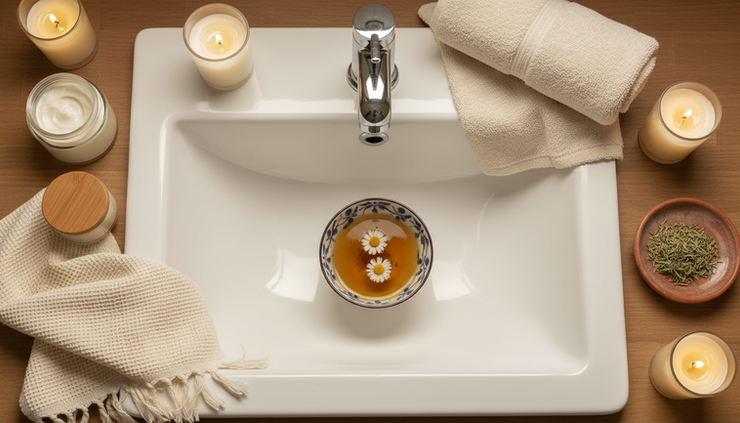
Choose one tea, such as chamomile or green tea. Use one tea bag or a small spoonful of dried herbs in hot water. Let it steep, then cool completely.
Plain matters. No sugar. No lemon. No milk. No artificial flavors.
Use it as a compress
Soak a clean cotton cloth or reusable round in the cooled tea. Press it over the cheeks, forehead, or chin for a few minutes. Don’t rub.
This small pause is where the ritual becomes more than skin care. It becomes a breath.
Seal with moisturizer
After the compress, apply a mild moisturizer. This helps keep skin feeling soft and comfortable.
If you’re doing this during the day, use sunscreen afterward. Herbal tea doesn’t replace sun protection.
Store it safely
Fresh tea can spoil. If you make extra, keep it covered in the refrigerator and use it within a day. When in doubt, toss it and brew a fresh cup.
For homemade remedies, clean tools matter. Use clean cups, clean cloths, and clean hands every time.
How ancestral rituals shape modern beauty routines
Ancestral beauty rituals aren’t frozen in the past. They change as families move, ingredients shift, and new products become available. That’s what makes our skincare rituals so meaningful today.
A modern routine might include a dermatologist-recommended cleanser, a store-bought moisturizer, sunscreen, and a weekly chamomile compress learned from an abuela. That mix is normal. Culture and modern care can sit together beautifully.

These rituals influence modern beauty in a few clear ways.
They teach skin care as care, not punishment
Many family remedies focus on soothing, softening, and restoring. They don’t treat the face like a problem to attack. That mindset feels refreshing, especially when beauty trends can push people to do too much.
A tea compress says, “Let’s calm things down.” That’s a gentle message.
They value ingredients you can recognize
Herbal remedies often use plants people know by scent, taste, and memory. Jengibre. Manzanilla. Sábila. Romero. Rosa. Yerbabuena.
That doesn’t mean every natural ingredient belongs on the skin. Lime juice, for example, can irritate skin and make it more sensitive to sun. But the desire for familiar, plant-based care is still powerful.
This is why the Benefits Of Tea Infused Skincare Products appeal to so many people. They bring familiar botanicals into cleaner, more stable formulas than homemade mixtures may offer.
They turn routine into connection
For many people, using a home remedy brings back a person, a place, or a moment. Maybe it’s a grandmother blowing on a hot cup before handing it over. Maybe it’s a mother saying, “Ponte manzanilla.” Maybe it’s a Sunday reset after a long week.
That emotional connection is a real part of Herbal Beauty. Skin care touches the face, but it also touches memory.
When to use care with remedios caseros
Home remedies can be beautiful, but skin deserves respect. A few simple rules can help keep the skin safe and gentle.
Patch test first Try a small amount on the inner arm or behind the ear. Wait a day before using it on your face.
Avoid broken skin Don’t apply herbal tea to cuts, burns, open pimples, or rashes.
Skip strong kitchen ingredients Lemon, lime, baking soda, cinnamon, and toothpaste can irritate skin.
Keep tea out of your eyes Even gentle herbs can sting.
Don’t replace medical care If you have painful acne, swelling, infection, allergic reactions, or ongoing irritation, talk with a licensed health professional.
This article is for general information and cultural education. It’s not medical advice.
The beauty of keeping it simple
The heart of tea-based skin care is simplicity. A warm brew. A clean cloth. A few quiet minutes. A habit that says care can come from home, memory, and plants.
That’s why Remedios Caseros continue to matter. They remind us that beauty doesn’t have to feel disconnected from who we are. It can come from the same kitchen where stories are told, meals are shared, and someone always knows which tea to make.
If you’re building a routine inspired by Hispanic Home Remedies For Clear Skin, start with chamomile. Keep it gentle. Notice how your skin feels. Let the ritual be calm, not complicated.
For more ways to care for your face with simple, thoughtful routines, visit Pasión de la Piel’s face care guides. Let your next skin ritual feel rooted, gentle, and truly yours.


Comments